The Day Production Taught Me What Ownership Really Means
Jan 18, 2026 • 6 min read • Engineering, Ownership, Backend, Production, Career
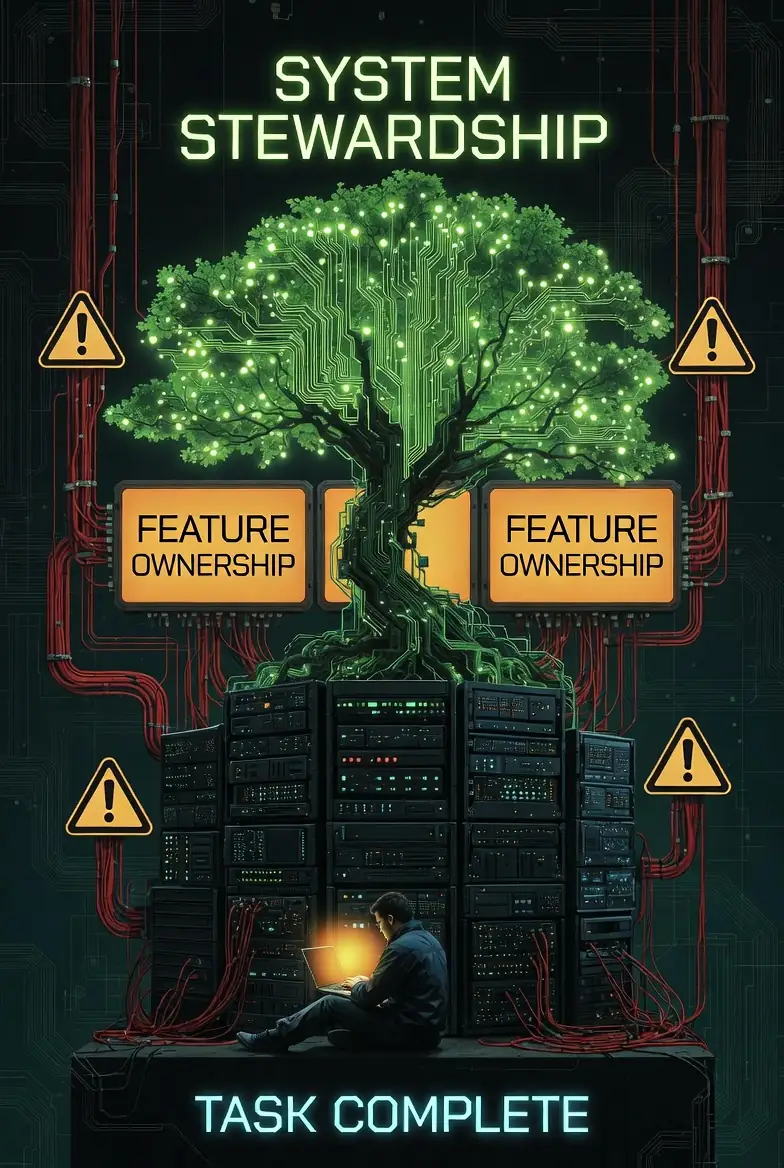
Ownership in engineering isn’t a title or a responsibility on paper. It’s a mindset that production forces on you - usually when something breaks.
Early in my career, I thought ownership meant being responsible for a piece of code like:
A serviceAn endpointA feature
If it worked, I had done my job. If it didn’t, someone else would fix it. Production changed that belief.
1. The Silent Killer: The 'Not My Problem' Culture
In many organizations, the biggest bottleneck isn't the CPU or the database - it's the handoff. When a bug sits in a queue because it 'belongs to the platform team' or 'is a frontend issue', the product rots. This culture of Not My Problem creates a massive hidden cost.
Behavior | Hidden Cost | Ownership Solution |
|---|---|---|
Siloed Knowledge | MTTR (Mean Time to Recovery) skyrockets. | Cross-training and 'follow the error' debugging. |
Ticket-Passing | Context loss and user frustration. | The 'Driver' model: One person leads until resolution. |
2. The Three Dimensions of Ownership
True ownership isn't a single checkbox. It’s a three-dimensional responsibility that spans the entire lifecycle of a feature.
Technical Ownership | Choosing the right data structures and ensuring the code is maintainable for the next person. |
Operational Ownership | Watching the metrics, tuning the alerts, and owning the on-call experience. |
Product Ownership | Asking Why are we building this? and Does this actually solve the user's problem? |
3. The Ownership Maturity Model
Where do you stand on the ownership scale? Most engineers move through these stages as they grow into senior roles.
4. The Microservices Paradox: Diffusion of Responsibility
Microservices were supposed to make ownership easier by creating small, manageable boundaries. Often, they do the opposite. When a request touches six services, it’s easy for six engineers to say, 'My service is returning a 200, so the problem isn't mine'. This is the Diffusion of Responsibility.
The 'Not My Service' Trap
In high-scale systems, the most expensive bugs live in the 'spaces between' services. Ownership means following the trace, not just checking your own dashboard.
5. Production: The Ultimate Ownership Teacher
In theory, systems have boundaries. In diagrams, responsibilities are clear. In production, none of that matters. Errors don’t respect service boundaries.Customers don’t see microservices; they see a working product or a failing one.
Restoring Stability
Ownership means being willing to cross technical and organizational boundaries. It means looking at the logs of a service you didn't write because it's the right thing to do for the user.
6. The Blueprint: How to Foster Ownership in a Team
Ownership isn't just a personality trait; it's an environment. You can't expect ownership in a culture that punishes mistakes. To foster it, you need:
- Blame-Free Postmortems: Focus on system failures, not human ones.
- Self-Service Infrastructure: Let developers deploy and monitor their own code.
- Shared Success Metrics: Tie engineering goals to user outcomes, not just lines of code.
7. How Ownership Changes the Way You Code
Once you’ve owned systems at 3 AM, your code becomes pragmatic. You prioritize readability over cleverness because you know that clever code is impossible to debug when you're half-asleep.
// THE 'TASK' APPROACH
async function processOrder(order) {
  return db.save(order);
}

// THE 'OWNERSHIP' APPROACH
async function processOrder(order) {
  logger.info("Processing order", { orderId: order.id, userId: order.userId });
  try {
    const result = await db.save(order);
    metrics.increment("order_processed_successfully");
    return result;
  } catch (error) {
    logger.error("Failed to process order", { error, orderId: order.id });
    metrics.increment("order_processing_failed");
    throw error; // Let the caller handle it, but provide the context
  }
}
8. A Pragmatic Checklist for Owners
Before you merge your next Pull Request, ask yourself these four questions. If you can't answer them, you haven't fully 'owned' the change yet:
- Observability: If this fails at 2 AM, will the logs tell me exactly why without me opening a debugger?
- Blast Radius: If this component fails, what else goes down? Can it fail silently and safely?
- Rollback Safety: If I revert this commit in 10 minutes, will the database be in a corrupted state?
- Onboarding: Could a teammate who didn't write this code fix a bug in it using only the provided documentation?
Final Thoughts: The Quiet Reward
Ownership doesn’t always come with recognition. But it comes with something better: confidence. When you know you can stay calm, navigate a complex system, and restore trust, you stop being an 'implementer' and start being an 'engineer'.
Thanks for reading.

Written by Sanket Dofe
Full-stack engineer & system architect. I build scalable products and write about engineering clarity.
Your Take?
How did this piece land for you? React or drop your thoughts below.
Join the Conversation
Keep Reading
Recommended articles & engineering write-ups.
Why Observability Is an Engineering Skill, Not a Tool Choice
Feb 01, 2026 • 10 min • Backend, Observability, Engineering, Production, Reliability
Observability isn’t something you buy or plug in. It’s a way of thinking about systems that reflects how engineers design, reason, and take ownership.
Why Debuggability Is a Feature, Not a Nice-to-Have
Jan 25, 2026 • 8 min • Backend, Debugging, Reliability, Production, Engineering
Debuggability determines how fast teams recover when things break. In real systems, it’s not optional—it’s a core product feature.
When Clean Architecture Breaks Down in Real Products
Jan 11, 2026 • 7 min • Architecture, System Design, Clean Architecture, Engineering
An exhaustive analysis of why strict architectural patterns struggle under production pressure, performance requirements, and the need for team velocity.
Building Reliable Systems on Top of Unreliable APIs
Jan 04, 2026 • 6 min • Backend, Integrations, APIs, Reliability, SaaS
Most production systems depend on APIs they don’t control. This is what it actually takes to build reliability when your dependencies are unpredictable.